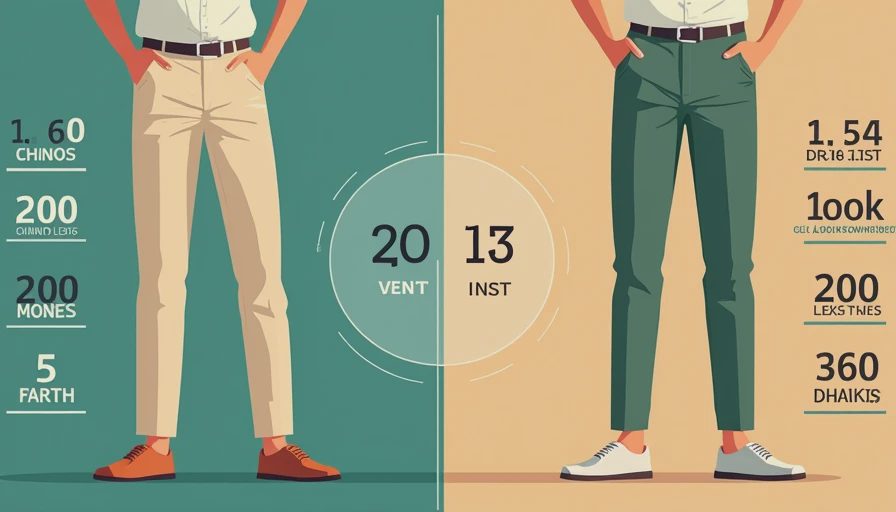
You’re standing in a Target aisle (or scrolling the Uniqlo app) staring at two nearly identical pairs of pants. Both are under $40. Both look like they’d work for your office job, a Friday night out, and maybe even a casual weekend coffee run. The only question is: affordable chinos vs khakis which actually last longer? It’s a fair concern when you’re trying to stretch your wardrobe budget. I’ve been there, buying a pair of khakis that faded weird after three washes, and a pair of chinos that held their shape for over a year. Let’s sort out the difference so you don’t waste money.
The Fabric Difference: Why One Fades Faster
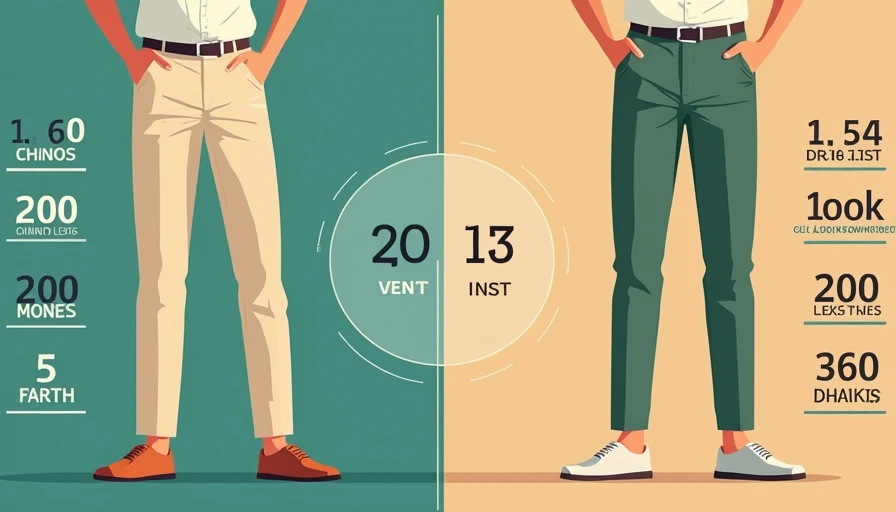
The core difference between chinos and khakis comes down to the weave and weight of the cotton. Traditional khakis are made from a tight, heavy twill weave, often 100% cotton, which gives them that crisp, almost stiff feel. That stiffness can be a double-edged sword. On one hand, it holds a crease well and looks sharp for business-casual settings. On the other, that tight weave often means the dye sits on the surface, making them prone to fading — especially if you’re washing in warm water or drying on high heat. Affordable khakis (think Dockers or Haggar at $30-$50) often use lower-grade dyes to keep costs down. I’ve had pairs that looked noticeably lighter after just a few wears.
Chinos, on the other hand, tend to use a looser twill weave with a slightly brushed finish. That gives them a softer hand feel and more flexibility, but it also means the dye penetrates deeper into the fibers. Brands like Uniqlo’s stretch chinos ($40) or J.Crew Factory’s broken-in chinos ($35 on sale) use garment-washing techniques that set the color before the pants hit the store. That’s why chinos often keep their color longer — the fading is more gradual and even, not patchy. If you’re looking for affordable chinos vs khakis which actually last longer in terms of color retention, chinos usually win.
Stitching and Construction: What to Look For in Affordable Pants
Price alone doesn’t tell you everything about longevity. I’ve seen $40 chinos outlast $60 khakis because of small construction details. Here’s what to check when you’re comparing affordable chinos vs khakis:
- **Stitching:** Look for double-stitched seams along the inner leg and crotch area. That’s where pants blow out first. I’ve ripped the crotch on a pair of $30 khakis after three months of daily wear. My Uniqlo chinos have held up for over a year on the same commute.
- **Reinforcement:** Some affordable pants now add a gusseted crotch (a diamond-shaped piece of fabric) for extra mobility and durability. It’s more common in chinos than khakis in this price range. Brands like Bonobos (on sale around $60) use it, but even Target’s Goodfellow chinos ($28) have reinforced crotch stitching that beats most sub-$40 khakis.
- **Button vs. Snap:** A metal button with a shank (the loop behind it) is stronger than a snap closure. Snaps pop off over time, especially on cheaper khakis.
- **Zipper:** Look for a zipper that feels smooth when you run it — cheap zippers are a telltale sign of short lifespan. YKK zippers (most common in mid-tier brands) are a good bet.
Real-World Wear Test: Chinos vs Khakis Over a Year
I’ve been wearing both types of pants for the last few years, and I’ve tracked how they hold up. Here’s a rough comparison based on my experience and what I’ve heard from friends:
| Aspect | Affordable Khakis (Dockers, Haggar) | Affordable Chinos (Uniqlo, Target, J.Crew Factory) |
|--------|-------------------------------------|-----------------------------------------------------|
| **Color fade after 6 months** | Noticeable, especially in dark colors | Gradual, more even |
| **Shape retention** | Keeps crease well, but fabric can pill | Softens but doesn’t bag out as much |
| **Seam durability** | Standard single-stitch on budget models | Often reinforced double-stitch |
| **Stretching out** | May shrink in length after washing | Minimal shrinkage if washed cold |
| **Overall lifespan (daily wear)** | 6-9 months | 12-18 months |
In my experience, affordable chinos typically last longer than khakis at the same price point. That’s not to say khakis are bad — they have their place, especially for more formal occasions where a crisp look matters more than longevity. But if you’re asking affordable chinos vs khakis which actually last longer, the answer leans toward chinos.
How to Make Either Pair Last Longer
Whichever you choose, a few habits can double the lifespan of your pants:
- **Wash cold, hang dry.** Heat is the enemy of cotton. I wash all my pants in cold water and never put them in the dryer. Hang them on a hanger or lay flat — they’ll keep their color and shape much longer.
- **Rotate your pairs.** If you wear the same pants three days in a row, the fibers don’t get time to bounce back. Ideally, have at least two or three pairs in rotation. That way, each pair gets a rest day.
- **Spot clean when possible.** A small stain doesn’t require a full wash. Use a damp cloth and a little dish soap. Over-washing accelerates fading and wears out seams faster.
- **Buy a size up in the waist.** If you’re between sizes, go larger. A belt can cinch the waist, but tight pants put stress on the seams and zipper. Loose pants last longer.
The Final Takeaway
If you’re a guy on a budget trying to build a solid wardrobe, the smart money is on affordable chinos. They offer better color retention, softer feel, and usually better construction details for the price. Khakis are fine for a specific crisp look, but they’ll wear out faster — especially at the sub-$50 level. So when you’re standing in the aisle wondering affordable chinos vs khakis which actually last longer, go with the chinos. Your wallet (and your closet) will thank you.
Remember: if it looks good twice a week, it was worth buying.

No letters yet — be the first guest to write.